

I met Liam Syed at my 50th birthday party, in the tiny besieged West Bank village of Um Al Kheir. A visiting journalist from Amman, he seemed a bit lost among us, although to be fair, we were all lost. Exhausted, and demoralized from documenting all manner of militarized violence and settler incursions against our Palestinian friends, for several weeks on end. The candy and cake a friend had generously supplied for us felt incongruent. We felt sick after only a few bites. We had lost our western knack for indulgence and excess. We were in a certifiable slump.
Liam wanted to document shepherds at work, so I invited him to visit Qawawis, the tiny village where Ajahn Santamano and I were doing protective presence work. We’d been there for a couple of months already, and I’d fallen in love with our host family, a four generation household that included three powerful elders, one of them born before the Nakba, four precious children, and a herd of sheep that reproduced tiny lambs every other week, each one more adorable than the last. We were far from home but I’d never felt more at home in my life.
Liam joined us with his camera, with a green kuffiyeh wrapped around his head like a turban, and documented the day in black and white.
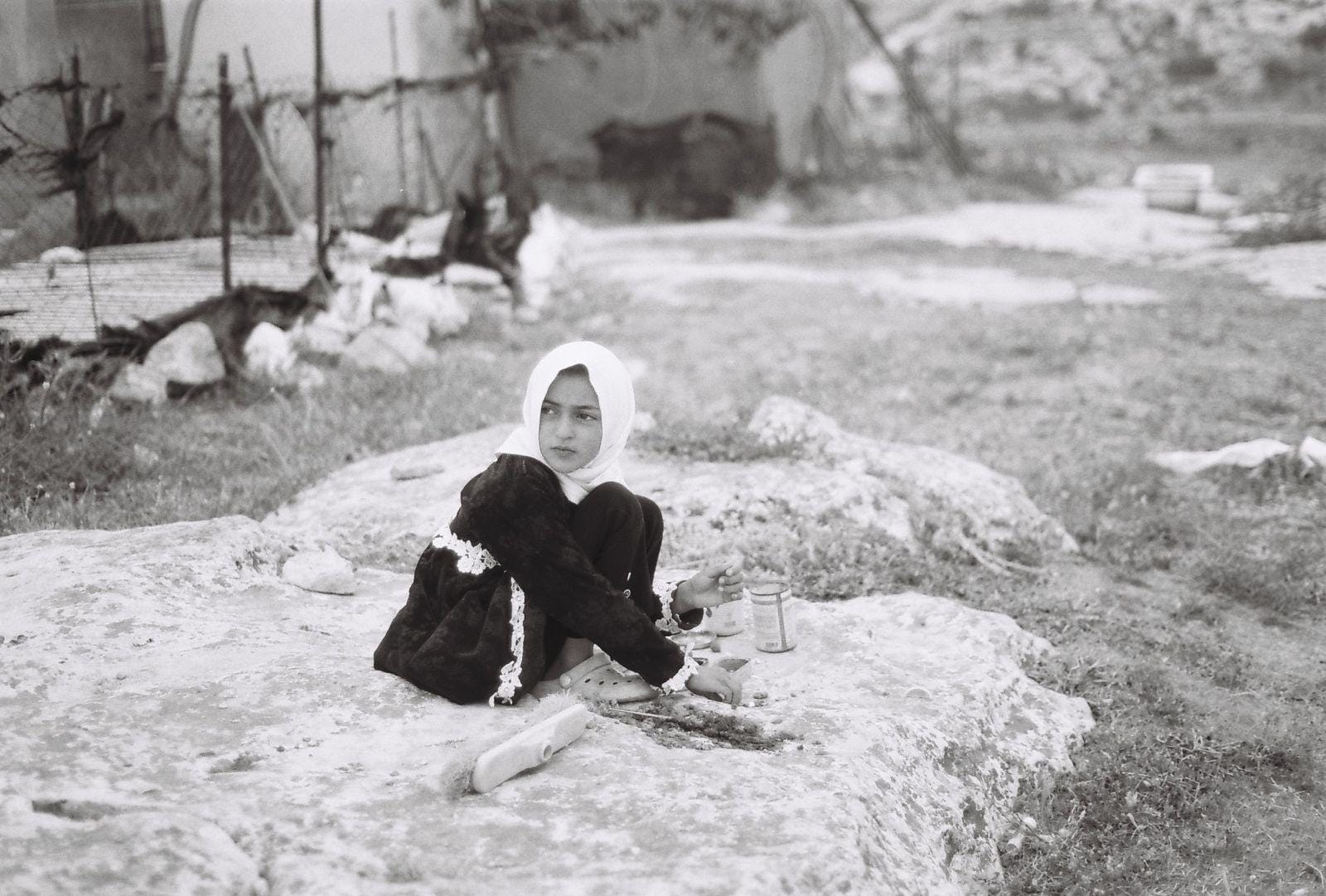
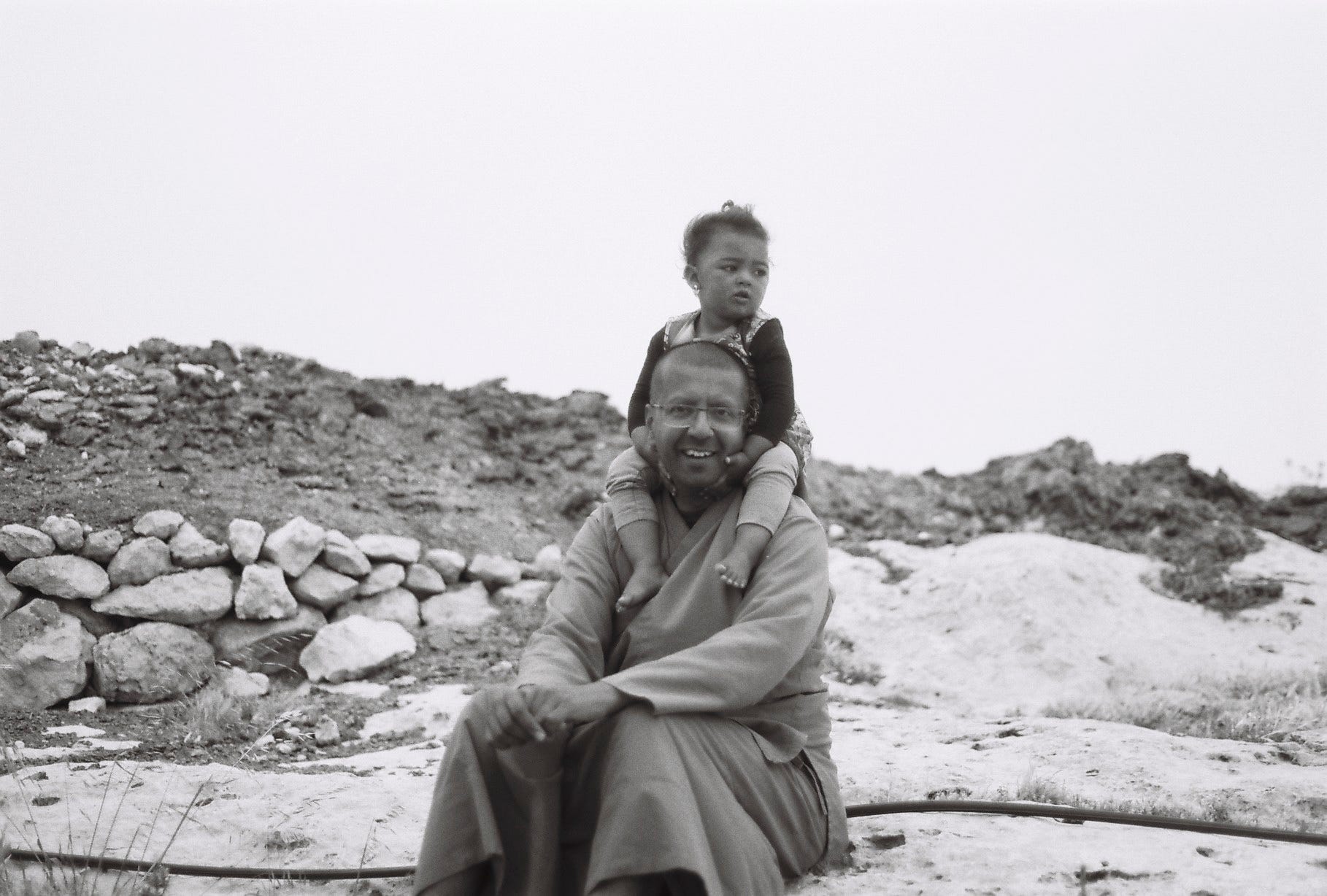
I had no idea a theme would emerge from Liam’s photo shoot. It became clear to me, as I looked at his stunning documentation, that amidst the grueling ethnic cleansing and annexation of the West Bank, Liam had caught us all deep in the art of play. And that play, and the joy and connection that we created between us while we played, was something powerful, in this place where colonial settler violence threatened to keep all of us half-insane with feelings of powerlessness and outrage. On this land, where the male adults had experienced life-threatening beatings, shootings and abductions, where grazing land was constantly invaded by the settlers on the hills surrounding the family olive trees, play was an act of resistance.
You can see the power of play in Outdoor Soup Making 1 and 2, on the rocky hills of Qawawis, where the children cooked with their friend Jenna, a Jewish anti-Zionist who dripped with sweetness. Each child was deep in preparing their ingredients like culinary experts—combining just the right amount of soil, stones, and poppies from the land that had been their family’s and ancestors’ long before the creation of the Israeli state.
You can see the power of play in Liam’s Shataranj 1 and 2. Ajahn took it upon himself to teach the kids shataranj (chess), a word shared in common between the Indian subcontinent and the Arab world. In the main room where we ate and slept on the floor with the family, Ajahn unfolded the chess board and carefully taught the kids the names of the pieces in Arabic, helping them to understand each figure’s special powers. The children were hooked. Ajahn had never taught chess to children, least of all in a foreign language he was learning off of You Tube videos! Within days, the chessboard became the scene of grand battles and epic defeats and victories. I could sense the pride in Mohammed and Aisha, who were learning a new, secret skill.
And finally, you can see play as resistance in the photos of Ajahn and me with the children on our backs, in Piggyback 1 and 2. With aching necks, shoulders and lower backs, Ajahn and I joked that lifting these kids onto our bodies was the least we could do for Palestine, after everything our peoples and systems had taken from them. They deserved to be elevated high in the sky, no matter our discomfort. To be cherished and protected. To smile and laugh whenever possible, and to be reminded of their preciousness and beauty and brilliance. I think we had as much fun running around with them as they did. May you, too, feel the power of play when you most need it.
--anuradha bhagwati, executive editor
Liam Syed is a freelance journalist who works across various media, although he remains most passionate about photography. His photographic work aims to restore humanity to marginalized communities and capture moments of beauty that persist in the face of systemic oppression. He is one quarter Vietnamese / one quarter English (on his mother's side) and one quarter Irish / one quarter Pakistani (on his father's side).
🤎